 NVDA SIGNALS
NVDA signals.
Every level in view.
Entry, stop and targets in one clear setup. Review the plan, set your risk, then trade through your own broker.
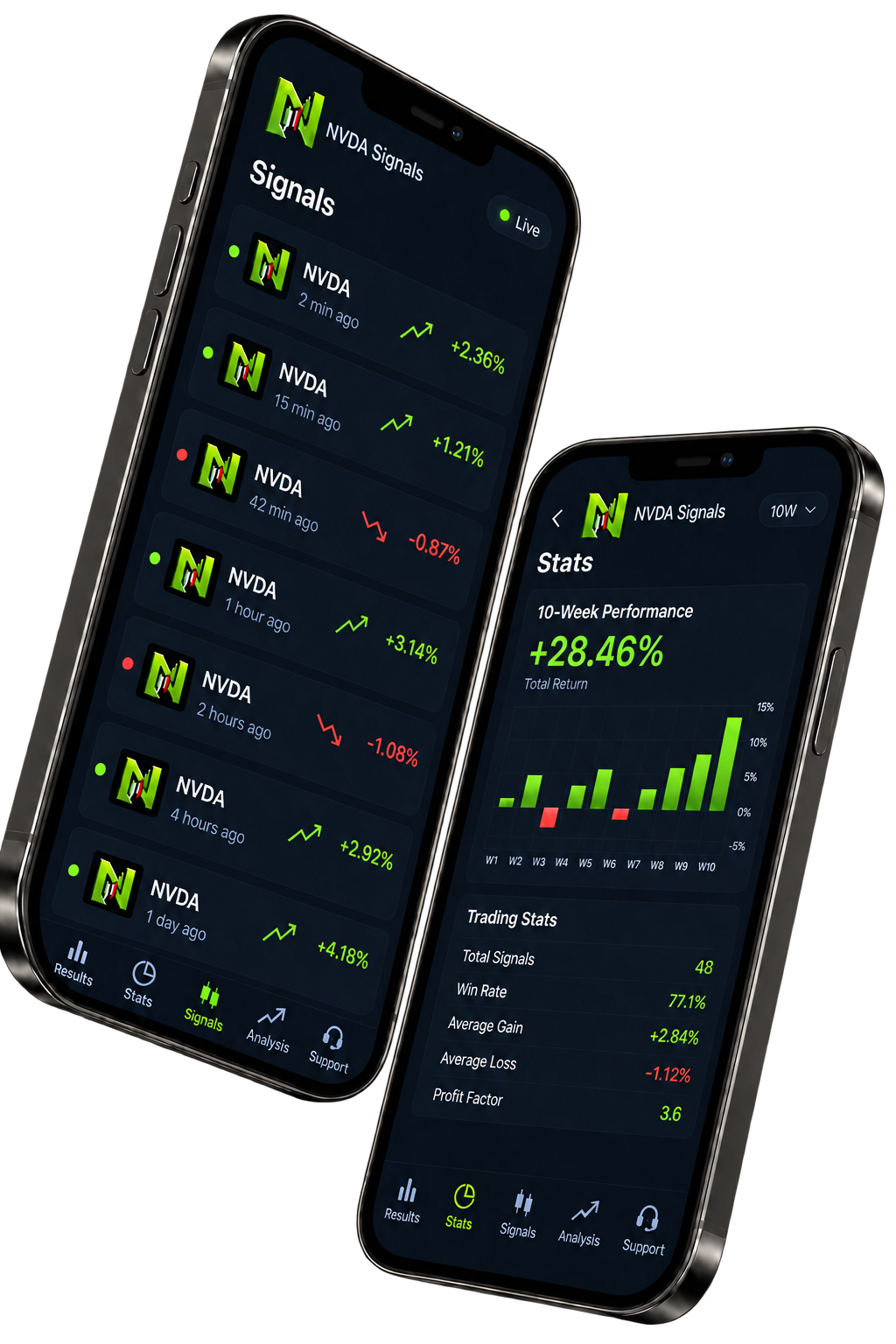
A setup you can read.
Direction, entry, stop and targets together. No one-line tip.
Three steps. Your trade.
The levels are clear. The decision stays with you.
See the setup
Read the direction, entry, stop and targets in one place.
Check the context
Compare the idea with NVIDIA news, the chart and your own rules.
Choose your size
Set your risk. Place any order through your own broker.
Every alert includes the full trade plan.
Not a vague tip. A structured setup with the invalidation shown alongside the potential targets, so you can evaluate the risk before taking any action.
- Exact entry price (or range)
- Pre-calculated stop-loss
- Three take-profit targets (TP1 / TP2 / TP3)
- Direction, timeframe, and setup status
- Follow-up status when the setup changes
Know your risk before the trade.
Set an account size and stop distance. See how the share count changes before you place an order.
One stock. The full setup.
A focused way to read an NVIDIA trade idea.
What we don't do.
A clear boundary around what NVDA Signals does—and what remains your decision.
We don't promise 100% wins.
Markets are uncertain and losing setups happen. Past results never guarantee a future outcome.
We don't trade your account.
You stay in control. We send the alert, you decide whether to take the trade. Your money never touches us.
We don't push leverage.
The app shows setup context, but position size and leverage remain your responsibility.
We don't guarantee signal frequency.
Alerts appear only when a NVDA setup meets the product's conditions. Some periods may be quiet.
NVIDIA stock questions, answered clearly.
What is NVDA? +
NVDA is the Nasdaq ticker for NVIDIA Corporation common stock. A share price refers to one share, while options, CFDs, and other leveraged products have different contract terms and risks.
What does an NVDA signal include? +
A structured alert can include the ticker and timeframe, direction, entry condition, invalidation level, target levels, status, catalyst, and supporting market context. It is a setup to review, not a guaranteed outcome.
How often are NVDA alerts published? +
There is no fixed quota. An alert appears only when an NVIDIA setup satisfies the product's conditions. Quiet sessions or conflicting evidence can mean fewer alerts.
When does NVDA trade? +
NVDA's main liquidity is during the Nasdaq regular session. Pre-market and after-hours trading are also available through some brokers, but thinner liquidity and wider spreads can make execution less predictable. Confirm the exchange calendar and your broker's hours.
What can move the NVDA share price? +
Important inputs include earnings, guidance, data-centre demand, AI infrastructure spending, product execution, supply constraints, gross margin, export controls, interest rates, valuation, index flows, and the wider semiconductor market.
Are NVDA shares, options, and CFDs the same? +
No. Shares represent equity ownership. Options have strike prices and expiries. CFDs and other leveraged products add margin and counterparty risk. The same market view can produce very different risk depending on the instrument.
Does NVDA Signals place trades or connect to a brokerage account? +
No. The app is an independent alert and education layer. It does not hold funds, choose share quantity, connect to a brokerage account, or execute orders.
Is trading NVDA risky? +
Yes. A single stock can gap sharply after earnings, guidance, regulation, or company news. Stops may execute away from the requested price, and leverage or options can magnify losses. Use only capital you can afford to lose.
Read the setup. Make the call.
Entry, stop and targets together. Your broker and risk limit stay yours.