 NVDA SIGNALS
The setup before the outcome.
Each alert is structured so you can review the thesis and risk before deciding whether it fits your own plan.
Three steps to understanding a setup.
A focused workflow for reviewing market setups without handing over control of your account.
Explore a setup
See how a NVDA idea connects an entry condition, invalidation and potential targets.
Read the context
Use the market guides to understand structure, catalysts and the difference between a price move and a trade setup.
Understand the sizing
Explore the position-size calculator and see how stop distance changes a hypothetical position.
What do NVIDIA buy and sell signals mean?
A buy or sell signal describes a conditional idea for NVIDIA shares, not an instruction that places a trade. The trigger explains when the idea becomes relevant; invalidation explains when it no longer holds. The examples here illustrate that structure rather than provide a current recommendation.
This page concerns NVIDIA common stock (NASDAQ: NVDA). Options, CFDs and short selling have different contract and broker requirements; the examples do not establish support for those products.
NVIDIA signals versus price alerts
A basic price alert tells you when a level is reached. A structured NVIDIA signal puts that level inside a setup: direction, timeframe, entry condition, invalidation and targets stay together. You can see what would activate the idea and what would cancel it.
NVIDIA is the company name; NVDA is its Nasdaq stock ticker. A stock setup also identifies the session and relevant company event, rather than treating every price move as an entry. See an NVIDIA setup example to follow the difference from a price level through to share-risk arithmetic.
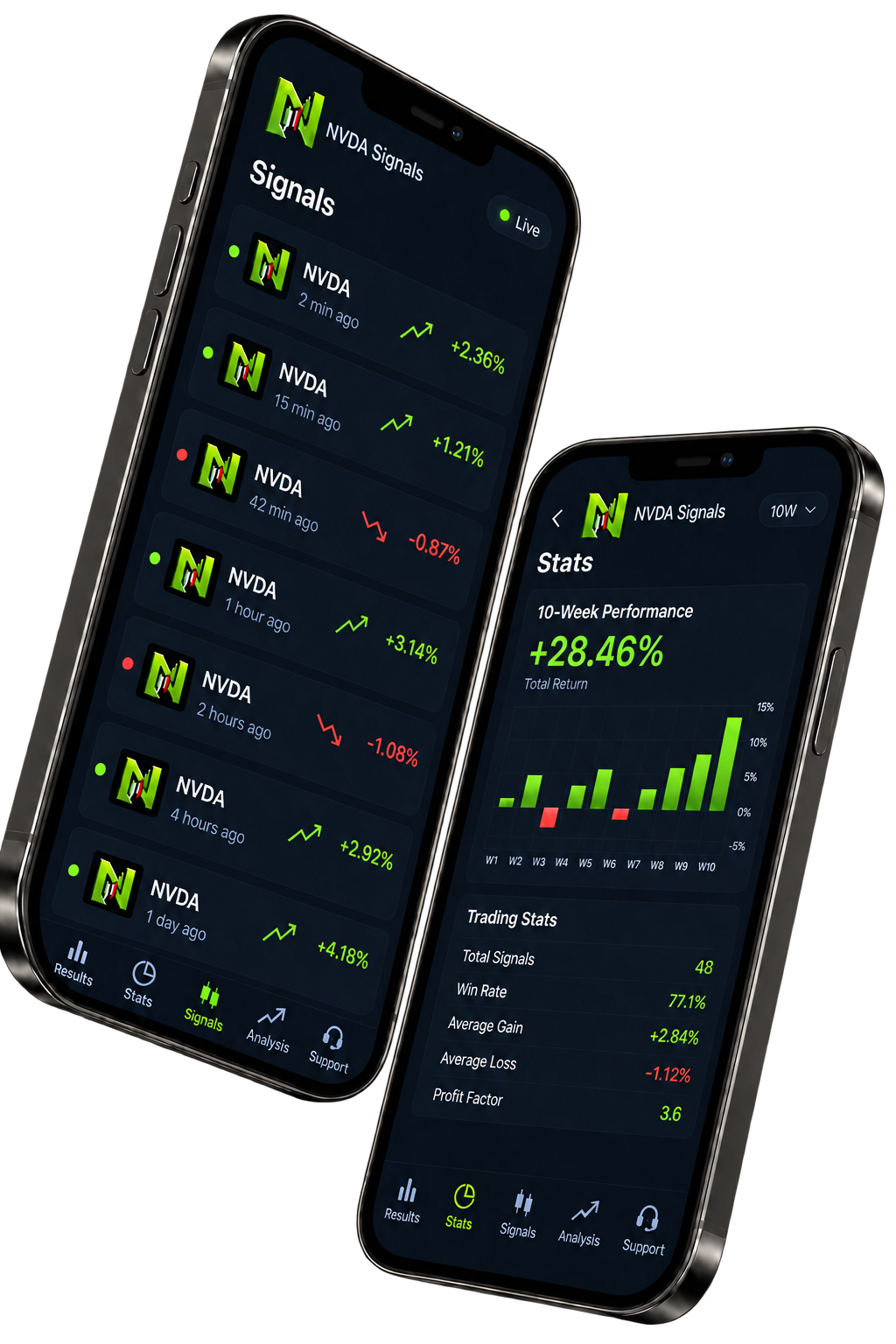
Every alert includes the full trade plan.
Not a vague tip. A structured setup with the invalidation shown alongside the potential targets, so you can evaluate the risk before taking any action.
- Exact entry price (or range)
- Pre-calculated stop-loss
- Three take-profit targets (TP1 / TP2 / TP3)
- Direction, timeframe, and setup status
- Follow-up status when the setup changes
What we don't do.
A clear boundary around what NVDA Signals does—and what remains your decision.
We don't promise 100% wins.
Markets are uncertain and losing setups happen. Past results never guarantee a future outcome.
We don't trade your account.
You stay in control. We send the alert, you decide whether to take the trade. Your money never touches us.
We don't push leverage.
The app shows setup context, but position size and leverage remain your responsibility.
We don't guarantee signal frequency.
Alerts appear only when a NVDA setup meets the product's conditions. Some periods may be quiet.
Follow NVDA with clearer context.
Review structured alerts, closed outcomes, and focused market education in NVDA Signals.
NVIDIA signals, explained.
What does an NVIDIA trading signal include?
A structured NVDA setup brings together the direction, timeframe, entry condition, stop or invalidation, targets and status. Read the levels together before deciding whether the trade fits your plan.
Are NVIDIA signals and NVDA signals the same thing?
Yes. NVIDIA is the company name and NVDA is its Nasdaq stock ticker. This page covers the same stock under both names.
How is an NVIDIA signal different from a price alert?
A price alert marks a level being reached. A structured NVIDIA setup adds the direction, timeframe, entry condition, invalidation and targets, so touching a level alone does not activate the idea.
Does a signal place a trade for me?
No. You choose your position size and place any order through your own broker. The signal does not connect to or control your account.
Can I use the same levels for options or CFDs?
Shares, options and CFDs have different prices, contract terms and risks. These stock setups do not establish support for an options or CFD strategy.